Researchers from the International Iberian Nanotechnology Laboratory (INL), the LEARN project’s coordinator, have published a review article in the high-impact journal Trends in Biotechnology, exploring the progress made in skin-on-chip models and their ability to uncover biological mechanisms.
The article, entitled ‘Microfluidic-based skin-on-chip systems for safety assessment of nanomaterials‘, has been developed by INL’s Nanosafety Research Group in collaboration with Grupo Boticário, Inmetro, University of Twente and 3R Center Tübingen.
The conclusions reached will be key to the development of in vitro models, an important element of LEARN’s Work Package 5. The project seeks to advance the safety assessment of air pollutants by establishing a new, 3Rs-compliant, cost-effective skin-on-chip model that will identify molecular signals predictive of air pollutants-induced adverse health effects in humans, specifically in children’s health.
The present and future of skin-on-chip models
The skin is the body’s largest organ, continuously exposed to and affected by natural and anthropogenic nanomaterials (materials with external and internal dimensions in the nanoscale range). This broad spectrum of insults gives rise to irreversible health effects, from skin corrosion to cancer.
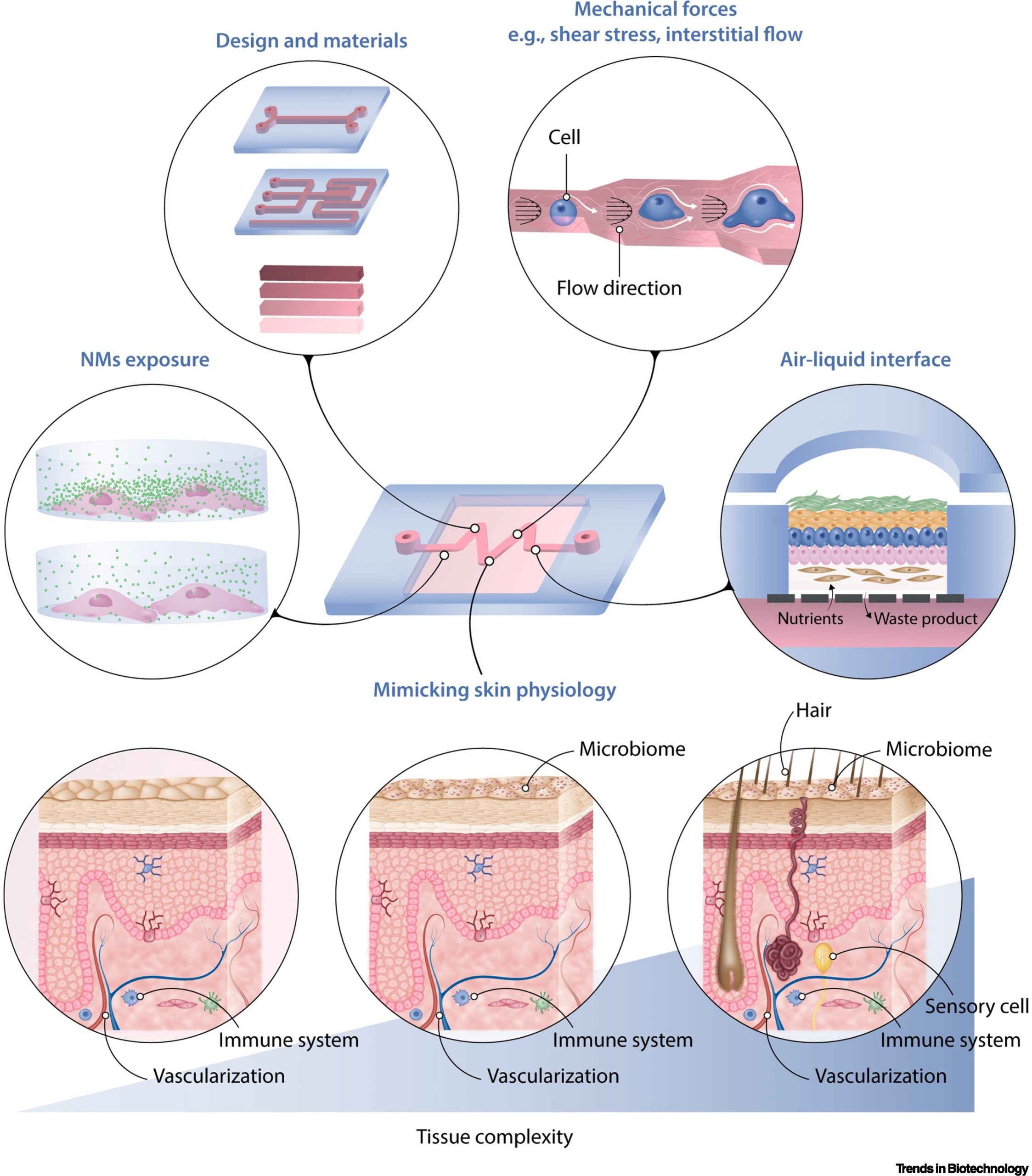
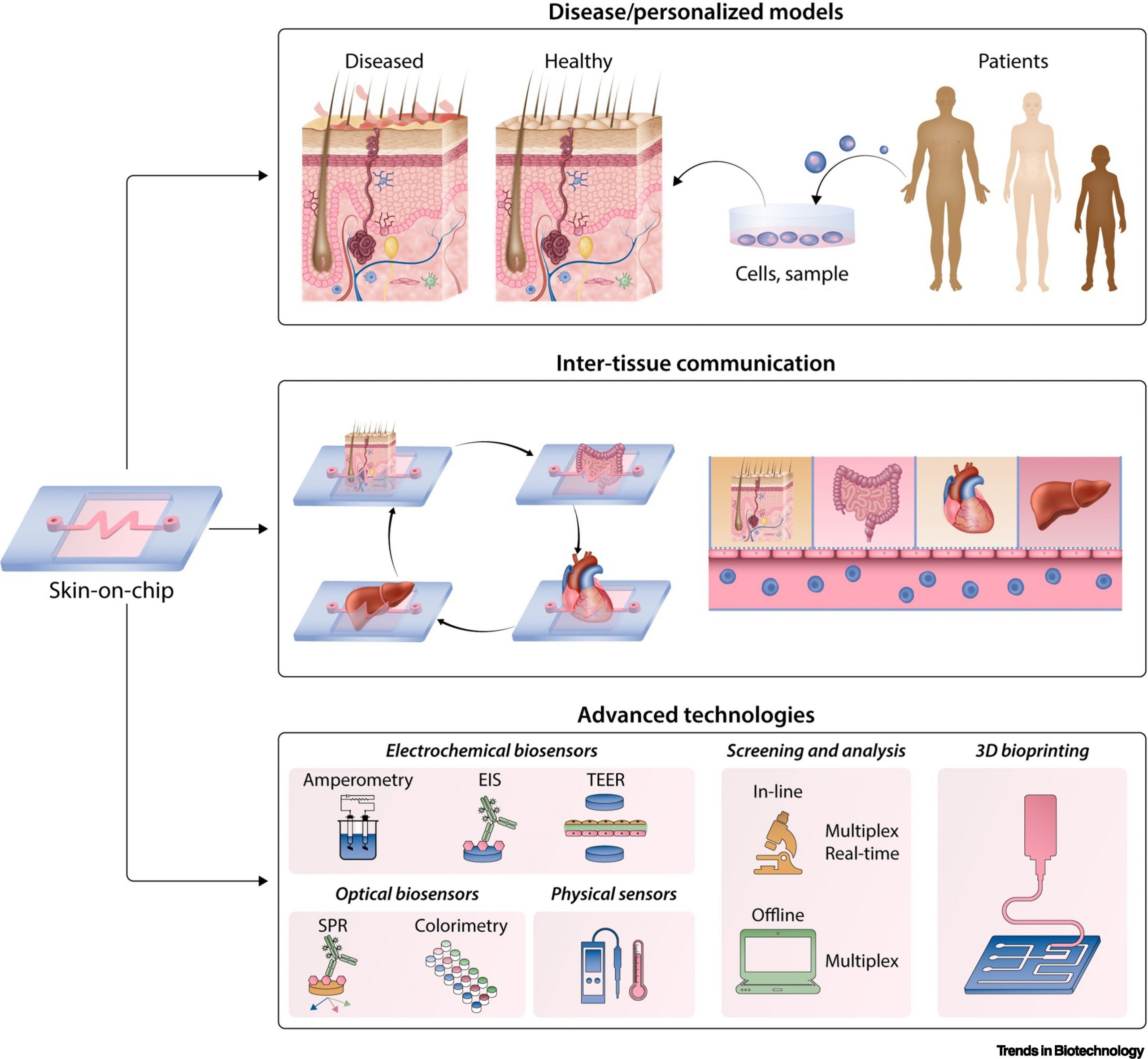
Although various in vitro and in vivo skin models have been developed, there currently needs to be more effective models for assessing the safety of nanomaterials. To address this issue, skin-on-chip models are being developed to integrate essential functional elements that can mimic skin physiology.

The advancement of skin tissue engineering and microfluidics technologies enables the creation of the next generation of skin-on-chip models capable of replicating the intricate complexity of skin physiology. These models can potentially reduce or even replace the need for in vivo models.
The future of skin-on-chip models for assessing the risk of nanomaterials is expected to involve multiplexing, real-time readouts, and the integration of artificial intelligence for managing and analyzing toxicity endpoints. This advancement would allow for a more comprehensive and efficient assessment of nanomaterials’ effects on the skin.
However, it is crucial to validate and standardize skin-on-chip models to ensure their reliability and acceptance by the research and industrial communities. This process is necessary for further adoption and utilization of these models in research and industry settings.
Which main ideas does the article explore?
First of all, the article analyses the progress made in skin-on-chip models and their ability to uncover biological mechanisms.
It also examines various approaches to mimic skin physiology on a chip, enhancing our ability to study the effects of nanomaterials on cellular exposure and transport.
Additionally, it sheds light on the potential prospects and obstacles, ranging from the design and fabrication of these models to their acceptance by regulatory bodies and industry.
The Nanosafety Research Group at INL
INL is the coordinator of the LEARN project. Its Nanosafety Research Group is a multidisciplinary group focused on identifying the potential health risks of nanomaterials, with the following research lines:
- Organ-on-a-chip technology to evaluate the safety of nanomaterials used on products that could contact the skin or the respiratory tract.
- Epigenetics and in vitro/in vivo bridging models to evaluate the safety of different nanomaterials and pollutants.
- Toxicology and immunotoxicology of nanomaterials using sensors and high-throughput technologies.
- In silico evaluations using QSAR, QSPR, QSTR, machine learning and life cycle assessment.
Source: Costa, S., Vilas-Boas, V., Lebre, F., Granjeiro, J. M., Catarino, C. M., Moreira Teixeira, L., Loskill, P., Alfaro-Moreno, E., & Ribeiro, A. R. (2023, July 5th). Microfluidic-based skin-on-chip systems for safety assessment of Nanomaterials. Trends in Biotechnology. Published by Elsevier. https://doi.org/10.1016/j.tibtech.2023.05.009
The LEARN project is a Horizon Europe project meant to monitor and evaluate indoor air quality at schools around Europe and its impact on children’s health. Our main goal is to develop and deploy novel sensors that can detect possibly harmful air pollutants, as well as advanced biosensors and optimised air remediation strategies. Find out more about our EU-funded project!