News & articles
The LEARN project calls for coordinated action for better indoor air quality in schools across Europe
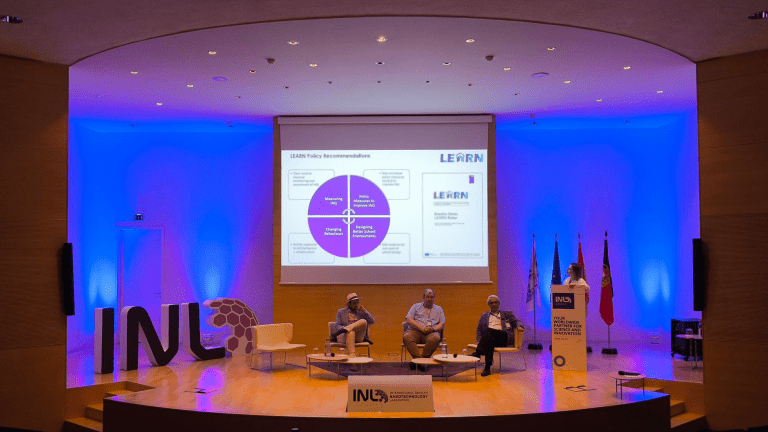
New policy recommendations from the EU-funded LEARN project, presented recently at its Final Conference in Braga, call for a coordinated European response to improve indoor air quality in schools, highlighting the urgent need for clear standards, better monitoring, and integrated policy action. Building on four years of scientific research across Europe, the project provides strong […]
The LEARN project delivers breakthrough evidence: better indoor air quality at schools boosts children’s health and learning
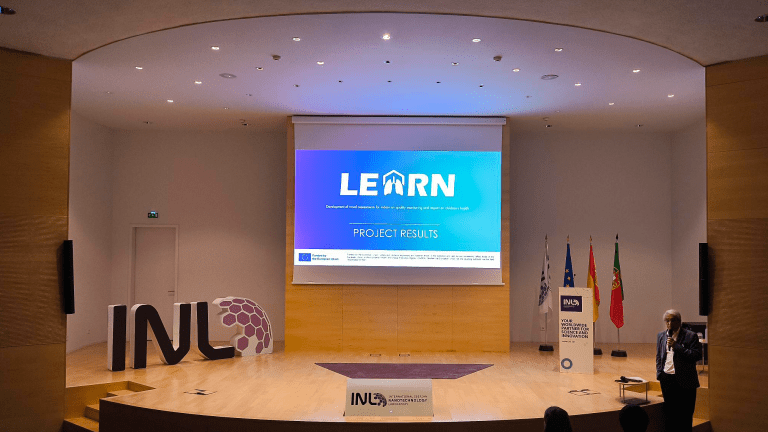
New results from the EU-funded LEARN project, presented at its Final Conference in Braga, Portugal, on 22 April 2026, reveal that improving indoor air quality in schools can directly enhance children’s health and learning potential, while also paving the way for new technologies and policies across Europe. Coordinated by the International Iberian Nanotechnology Laboratory and […]
The IDEAL cluster encourages policy action to address poor indoor air quality affecting children’s health
The IDEAL cluster has recently published its second joint policy brief to improve indoor air quality in Europe, this time focused on its effects on children’s health. The evidence from across the IDEAL Cluster projects highlights a persistent challenge: indoor air quality in schools and homes remains a critical yet under-addressed factor affecting children’s health, well-being, and learning potential. […]
A close look at the LEARN project’s indoor air quality cohorts at schools in Denmark
Indoor air quality in the school environment is a critical issue for the health of children. Because of their young age and current physical and mental development, children are particularly vulnerable to air pollutants, which can damage their health and cognitive function. The LEARN project is studying this phenomenon by conducting cohorts at schools in […]
Towards a real-time determination of air toxicity induced by volatile organic compounds (VOCs)
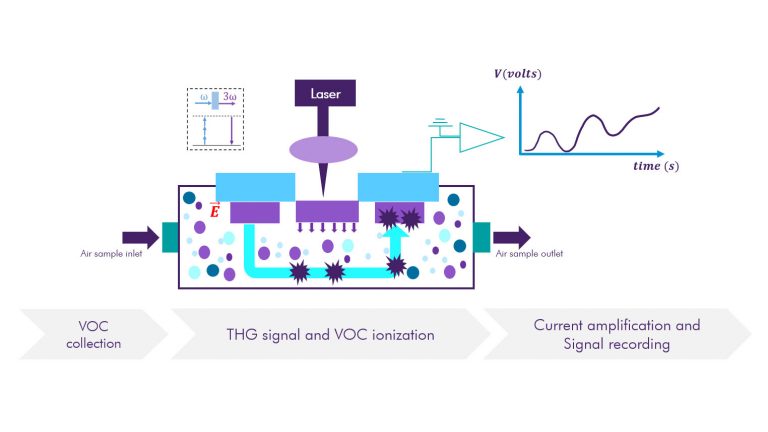
Air pollution from volatile organic compounds (VOCs) is a major health and societal concern, with direct impacts on cognitive development in schoolchildren. The INL team working at the LEARN project’s Work Package 4 (WP4) is addressing the limitations of current VOC sensing technologies by developing Sample Ionisation Potential Spectroscopy (SIPS), a novel method that enables […]
The LEARN project demonstrates new sensors for the detection of ultrafine particles (UFPs)
Understanding and improving air quality in schools is a central goal of the LEARN project. A particular focus is on ultrafine particles (UFPs) — particles smaller than ~100 nm — that are able to penetrate deep into the respiratory tract, cross biological barriers, and reach sensitive organs. Despite growing evidence that UFP exposure may contribute to […]
Nanosafety, key to studying the health effects of air pollutants from nanomaterials in the LEARN project
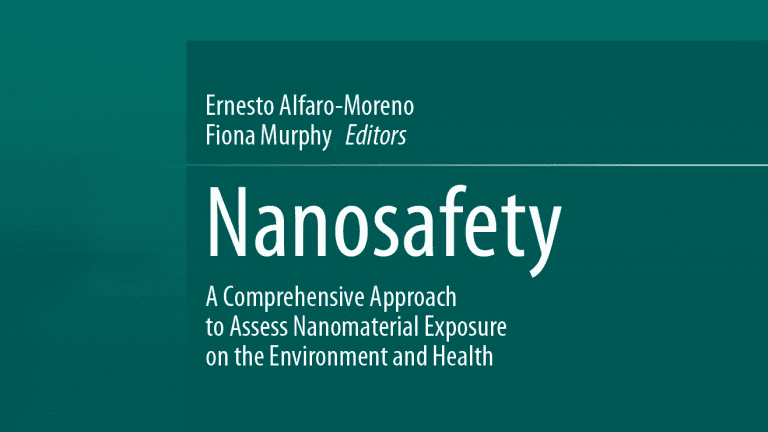
Researchers from the International Iberian Nanotechnology Laboratory (INL), the LEARN project’s coordinator, have published a new open-access book titled ‘Nanosafety: A Comprehensive Approach to Assess Nanomaterial Exposure on the Environment and Health‘. The book, edited by Ernesto Alfaro-Moreno and Fiona Murphy and published under Springer Nature, provides insights and guidance for researchers, policymakers, and industries in […]
VUV light from nanomembranes enables VOC detection: advancing sensor innovation in the LEARN project
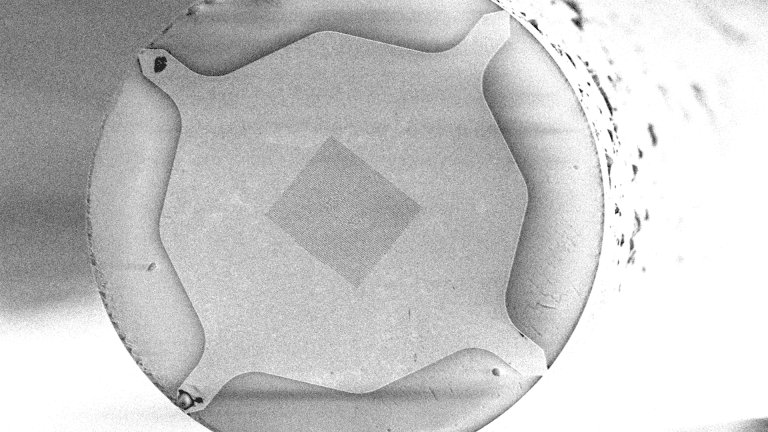
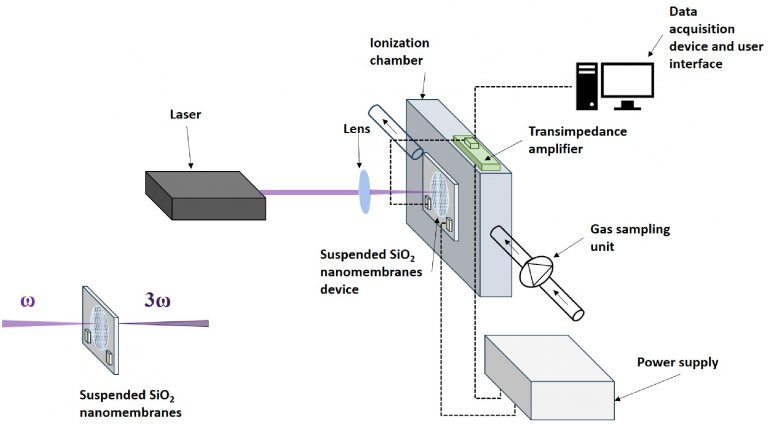
Researchers from the International Iberian Nanotechnology Laboratory (INL), the LEARN project’s coordinator, have published a new paper in the Optics Express journal, exploring selective VOC detection by using VUV light generated through THG from dielectric nanomembranes. The article, entitled ‘Volatile organic compound photoionization utilizing tunable quasi-monochromatic vacuum ultraviolet down to 120 nm obtained by third harmonic generation from […]
Optical anapoles excited by UV-A illumination, a step forward for the novel VOCs sensors in the LEARN project
Researchers from the International Iberian Nanotechnology Laboratory (INL), the LEARN project’s coordinator, have published a new paper in the Optics Letters journal reporting, for the first time, that the excitation of optical anapoles states can be achieved at the UV-A wavelength range. The article, entitled ‘Optical anapoles excited by UV-A illumination‘, was developed in the Diéguez group under […]
The IDEAL cluster publishes its first policy brief, with the LEARN project’s contribution
The IDEAL cluster has recently published its first joint policy brief to improve indoor air quality in Europe. The coordination of this publication fell to the Cluster’s Working Group 1 (WG1), which is focused on science translation into policy. This working group is led by K-HEALTHinAIR and SynAir-G and counts on the contributions of all […]
The harmful health effects of oxidative stress induced by particular matter
Researchers from the International Iberian Nanotechnology Laboratory (INL), the LEARN project’s coordinator, have published a new paper about particulate matter-induced oxidative stress in the journal Environmental Toxicology and Pharmacology. The publication, entitled ‘Particulate matter-induced oxidative stress – Mechanistic insights and antioxidant approaches reported in in vitro studies‘, summarises the latest in vitro findings on the role […]
The European Commission highlights the LEARN project as one of its major supported research initiatives on indoor air quality
The IDEAL cluster and its projects, including the LEARN project, were recently mentioned in a Staff Working Document by the European Commission, as the main research works on indoor air quality that the EU is currently supporting. The document was published on the 13th of June 2024 in Brussels, Belgium, under the title ‘Commission Staff […]
The LEARN project develops a board game to learn about indoor air quality in schools
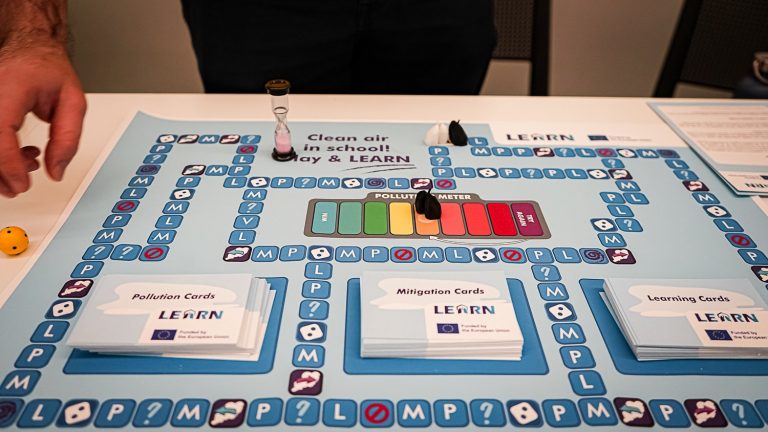
The LEARN project has produced a board game titled ‘Clean air in school! Play & LEARN’, for children to learn about indoor air quality in schools and strategies to improve it, collaboratively and playfully. The game is currently available in five different languages, including English, Danish, Dutch, Greek, Italian, Portuguese, and Spanish, and targets school […]
The impact of diesel exhaust particles on neurodegeneration and alterations in C. elegans
Researchers from the International Iberian Nanotechnology Laboratory (INL), the LEARN project’s coordinator, have published a new article in Environment International showing how Diesel Exhaust Particles (DEP) can trigger degenerative processes in neurons and alterations in Caenorhabditis elegans (C. elegans), and proposing which components could be responsible for this effect by using in silico models. This publication […]
The LEARN project conducts its first pilot study in Belgium on indoor air quality at schools
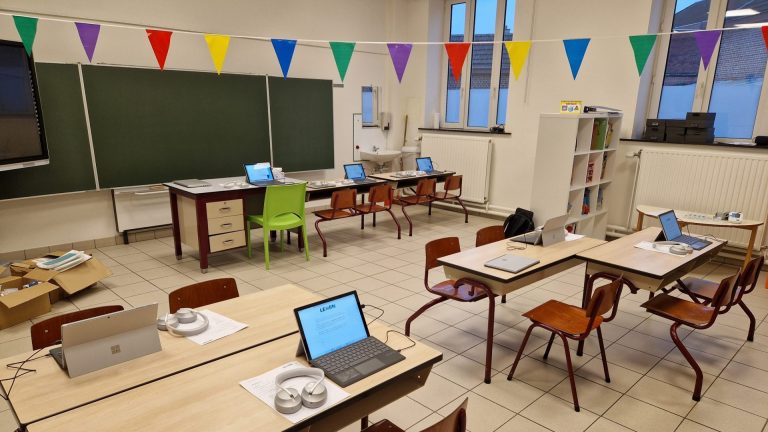
The LEARN project aims to control and evaluate indoor air quality in schools and its impact on the health and cognition of children. For that, this Horizon Europe project seeks to control and evaluate the air quality and levels of exposure of children in schools in three European countries: Denmark, Belgium, and Greece. Cohorts of […]
Participatory policy-making for cleaner air at schools
The LEARN project consortium has the ambitious goal of developing novel sensing and remediation strategies to improve indoor air quality in school environments. Through cohort studies in three European countries (Belgium, Greece, and Denmark), the health impacts of real-life exposure to indoor air pollution are being assessed. During these trials, the research group ‘SMIT’ of […]
The LEARN project, part of the IDEAL cluster for indoor air quality and health in Europe
The IDEAL cluster, which celebrated its kick-off last October 2022, focuses on identifying the chemical and microbiological drivers contributing to indoor air pollution, identifying their main sources and assessing their health impacts. This will help to map indoor environment pollution levels, sources, and health effects, and will facilitate establishing purposeful indoor air quality standards and […]
Interview with Ernesto Alfaro-Moreno, the LEARN project’s coordinator
Ernesto Alfaro-Moreno, head of Nanosafety at INL and coordinator of the LEARN project, was interviewed during the project’s second General Assembly celebrated in May 2023 in Ludwigsburg, Germany. In this interview, he explains the LEARN project’s goals, activities, expected results and synergies with other Horizon Europe projects, such as those participating in the IDEAL cluster. […]
Researchers from the International Iberian Nanotechnology Laboratory (INL), the LEARN project’s coordinator, have published a review article in the high-impact journal Trends in Biotechnology, exploring the progress made in skin-on-chip models and their ability to uncover biological mechanisms. The article, entitled ‘Microfluidic-based skin-on-chip systems for safety assessment of nanomaterials‘, has been developed by INL’s Nanosafety […]
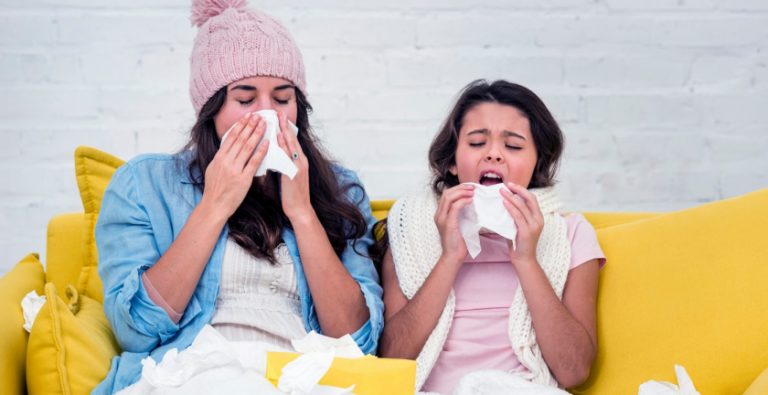
Spring allergies: how to prevent their symptoms at schools and other indoor environments
Spring is finally here and many of us have been looking forward to it after a long winter. The trees and flowers begin to bloom, the sun shines brighter, and the weather starts to warm up. Unfortunately, for millions of people, spring also marks the beginning of allergy season. Allergies affect children’s health and that […]
The LEARN project has obtained a €7,550,974 Horizon Europe grant from the European Commission to research indoor air quality at schools in Europe and its impact on children’s health and cognition. To that end, this EU-funded project will develop novel sensors, advanced biosensors and optimised remediation strategies, with the aim of improving children’s health in the long […]