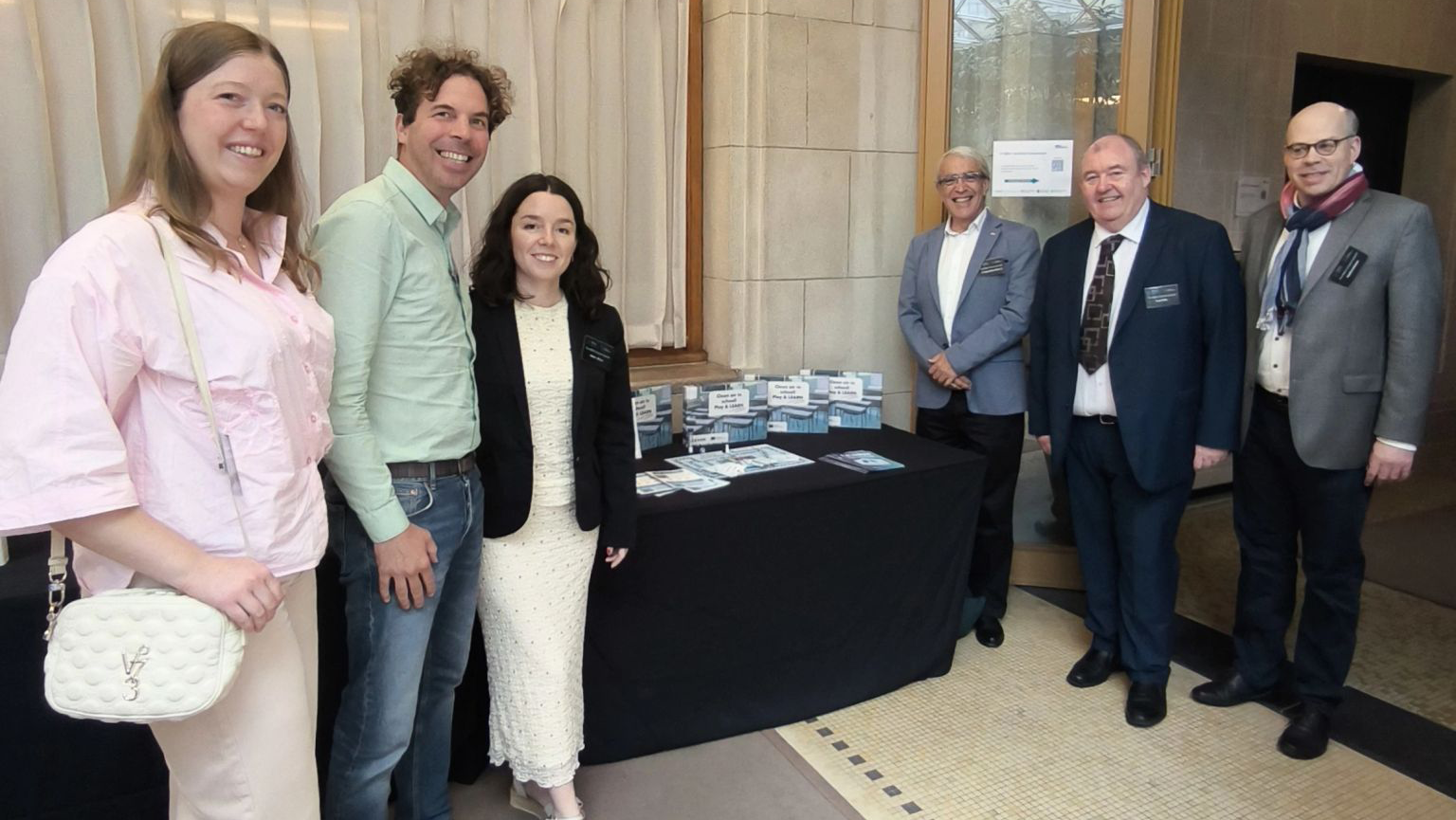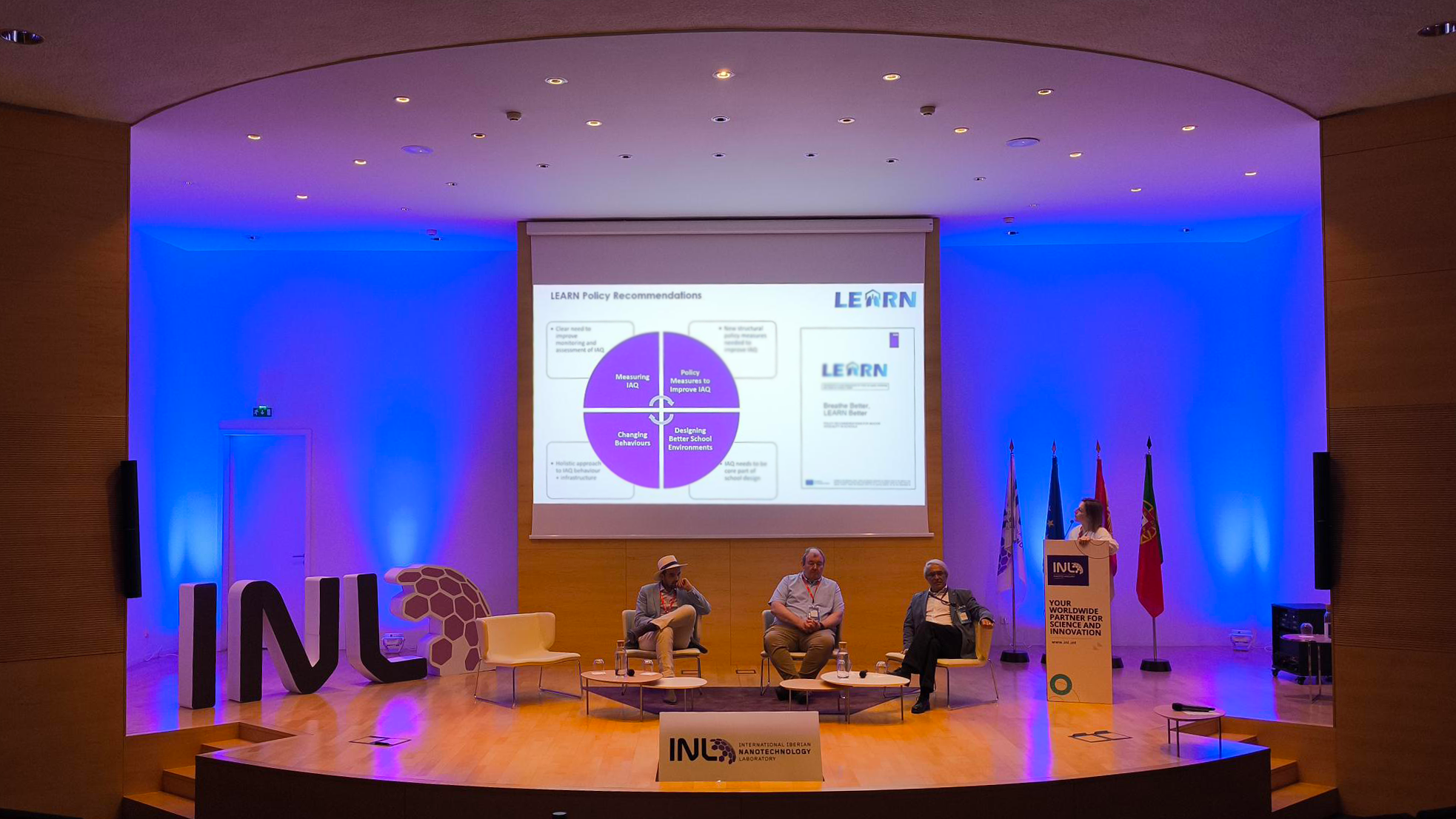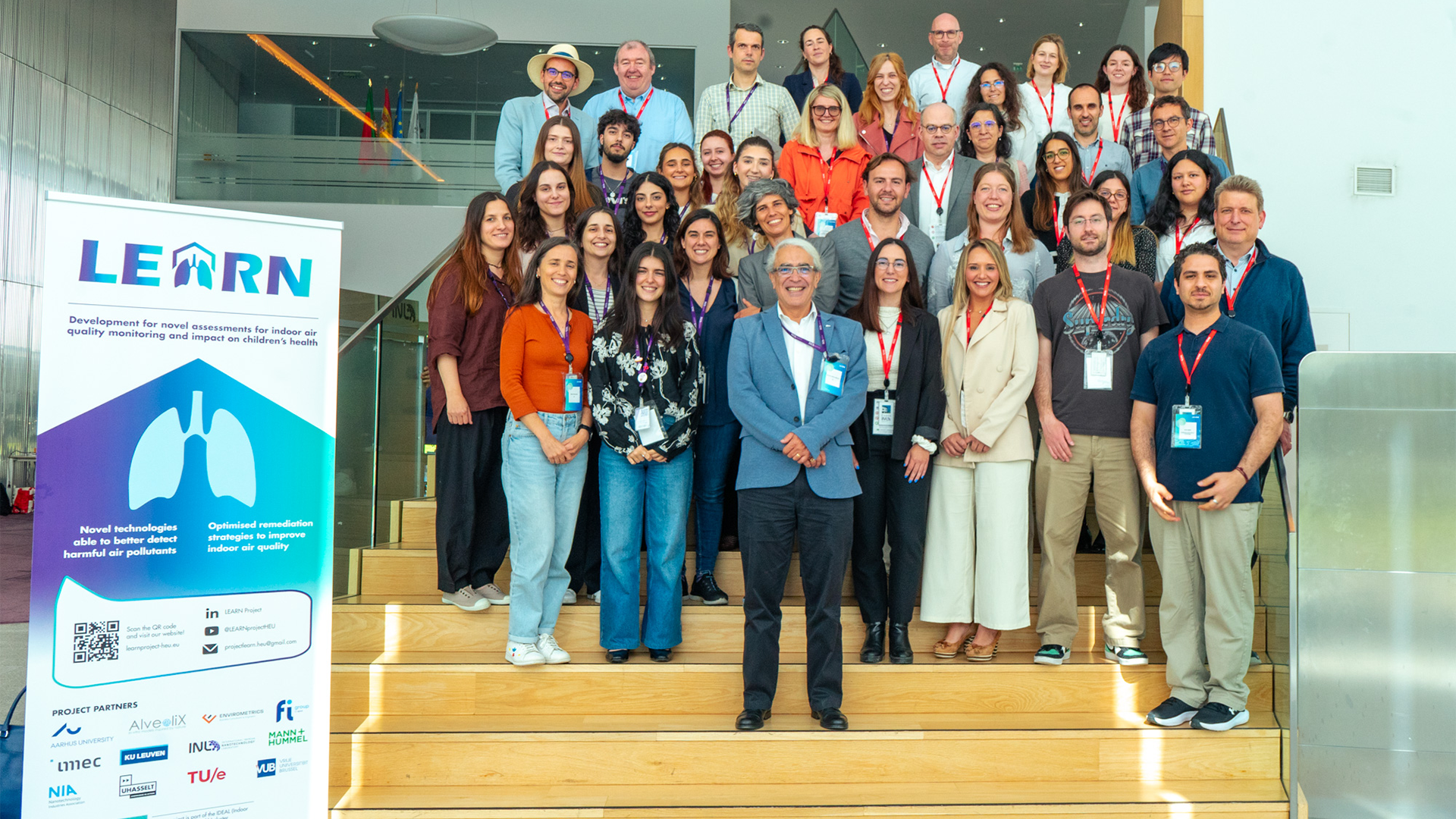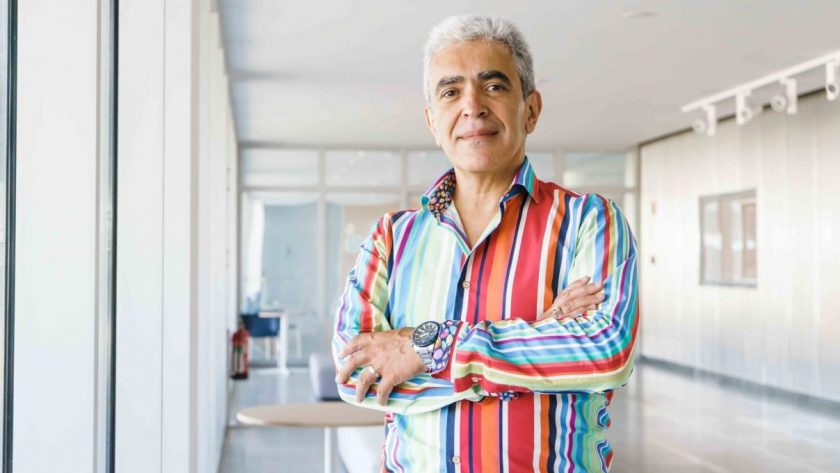
Ernesto Alfaro-Moreno, head of Nanosafety at INL and coordinator of the LEARN project, was interviewed during the project’s second General Assembly celebrated in May 2023 in Ludwigsburg, Germany.
In this interview, he explains the LEARN project’s goals, activities, expected results and synergies with other Horizon Europe projects, such as those participating in the IDEAL cluster. Moreover, he highlights the most relevant contributions of the project to European society and the importance of EU funding for that.
Watch the full interview on YouTube and read the transcription down below!
What is the LEARN project about?
The LEARN project deals with the evaluation of indoor air quality at schools in three different countries: Denmark, Belgium and Greece, in order to understand the levels of different kinds of pollutants. Specifically some chemicals, but also the presence of ultrafine particles (UFPs) in the air.
And we aim to evaluate what is the potential effect of these pollutants on the health of children. But also, by understanding the levels of these pollutants, we aim to establish a strategy to clean the air and to provide better indoor air quality for children in Europe.
Which new scientific methods, technologies or equipment are being developed?
We are developing different technologies. Probably the most important and interesting one is that we are developing two types of sensors to evaluate the presence of volatile organic compounds (VOCs) in the air and also to find the presence of ultrafine particles (UFPs) and to measure the concentration of these particles in the air.
This is very important because it can provide, in real-time, the concentration of these pollutants. And therefore, we can understand quickly if the people in these settings, in this case, children, are exposed to harmful concentrations of some components.
Also, we aim to develop an efficient strategy to clean the air of these classrooms. And we are developing new technologies using organ-on-a-chip methods, using multi-sensing devices, and new biological in vivo approaches to evaluate the potentially harmful effects of these pollutants, in order to understand if our children are at risk or not.
Why focus on indoor air quality at schools?
Obviously, children are the most important asset of society, so we need to protect them in order to reach adulthood as healthy as possible.
We know that breathing contaminated air is related to delays in development, and health effects that appear maybe 20, 30 or 40 years after you get exposed to some kinds of pollutants. And it’s very important to understand if the conditions our children are in nowadays are good and if not, it’s the right moment to clean the air and provide better conditions for children.
It sounds like a cliché, but they are the future of our nations. And, of course, we need to provide the best conditions for them. And this, in time, in 20 / 30 years, will mean that the cost for society will be lower because, if we have a healthier society, the cost that we invest in healthcare reduces.
What has been achieved so far in the LEARN project?
The achievements so far are that we are developing prototypes for the sensors. It’s not something that is finished, but we are in the phase of understanding if the settings of the systems we are developing are going to work properly once we use them in the field.
We are also in the process of creating new methodologies that allow us to assess toxicity in vitro and in vivo. Those are things that we can count as achievements because we are already evolving and having results that tell us that we are on the right track.
The main challenge is related to recruiting the children because different nations have different rules and regulations to work with children and to handle samples and information. That’s probably the most difficult part when it comes to doing the fieldwork, which will start happening later this year. That’s the biggest challenge of all, and we are working hard to overcome any issues. But so far, things are looking good.
How does the project benefit from its 12 partners?
We have engineers and physicists, who understand the behaviour of the air, how you can clean the air, and how you can measure the presence of a component because you use a laser and you have an excitement of a molecule. And you have a system to detect, which is very sophisticated from the point of view of physics and engineering.
To things that are much more on the side of the daily life of how children behave in a classroom, and how they may be exposed to certain pollutants. This aspect is led by people who are much more on the side of medical biology. To understand the mechanisms of action of the pollutants.
All the way to communicating to society, which is what we are doing now. So, we go from basic physics to communication. The goal of science is to generate new knowledge, but we have to land this knowledge, we have to ground this knowledge in a way that is useful for society. And we have to let know society how useful is what we are doing. Otherwise, if we fail in the communication of science, people will not understand what we are doing and why we should get funded again.
Which synergies are you forming with other EU-funded projects?
The call that invited us to do this project was devoted to indoor air quality and they funded seven different projects, that have very different approaches: some are working with children, some are working at hospitals, some others are working at offices, some others are working at houses…
And then, what the European Commission did was to gather all these projects in a cluster, which is called IDEAL. And we are discussing common grounds we have, common interests we have. Also, we are learning from the approaches others are using to have this kind of evaluation.
So, the synergies are there: we are gathering every few months to discuss and present the progress on different fronts of the projects. And we are gathering also once a year to have presential meetings in order to have a deeper discussion about what we do.
How will other projects and organisations benefit from your results?
The idea is to generate information that society can use to take decisions. Either to improve air quality by taking some actions. Either we will avoid the use of some kinds of carpets because we know that some components we are finding in the air come from the carpets, for instance, that’s something that could be very useful.
All the way to take much more active actions. Like, now, schools will require filtration air systems that guarantee that 99% of pollutants go away. 99% is a number that comes out of my head now, I cannot promise that. But this is what we would like to have: a real impact providing decision-takers, associations, and so on actions to benefit the health of children, in the case of the LEARN project, but also the entire society, in the case of other projects that are related to us.
What will be the LEARN project’s overall contribution to society?
The overall contribution to society is to provide knowledge to take the best decisions to protect the health of children at schools. Of course, this, later on, could be assessed or translated into the home environment, and there are also many groups working on outdoor environments.
So it’s a piece of the puzzle. But we think that we have a good chance to provide good information to decision-takers in order to have the best actions to improve the conditions for children.
How important is Horizon Europe funding for that?
This kind of projects have an overall cost of between 6 to 8 million euros. This is something that, without the support of the European Commission, cannot be done. Thus, it’s essential to keep ourselves working and providing good information to society.
Of course, we have the knowledge, the consortium of the LEARN project has twelve partners, but these twelve partners gather more than sixty people. If you consider that the four years of duration will provide a huge amount of information, the cost that we use at the end of the day is not that much.
Despite 8 million euros may sound like a huge amount of money, which it is, but at the end of the day, it’s worth the effort because we are going to provide better conditions for society and we need the European Commission to keep funding this kind of projects.
© Cover image from INL.