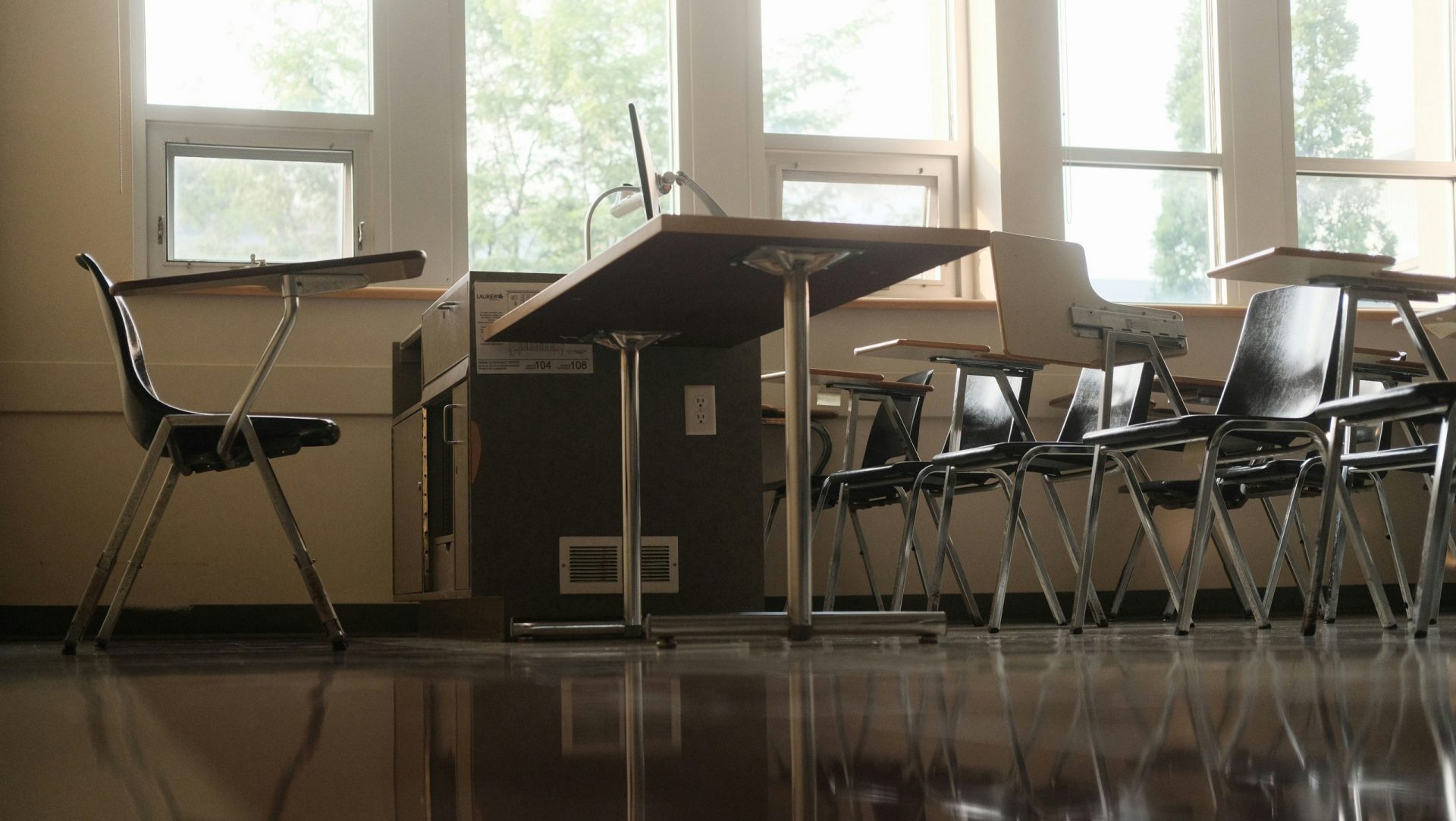
Indoor air quality in the school environment is a critical issue for the health of children. Because of their young age and current physical and mental development, children are particularly vulnerable to air pollutants, which can damage their health and cognitive function.
The LEARN project is studying this phenomenon by conducting cohorts at schools in different countries to measure indoor air pollution levels, establish their impact on the health levels and cognitive performance of children, and assess the effectiveness of mitigation measures like air purification systems.
Following a successful first experience in Belgium, Denmark is completing its last school, while Greece has recently started. Let’s take a closer look at the experience of the team implementing the Danish cohorts, in the words of Karin Rosenkilde Laursen and Varun Kumar, project coordinators at Aarhus University’s Public Health and Environmental Science Departments, respectively.
The cohort experience at Danish schools
Why is it so important to conduct these cohorts?
Karin: Indoor air in schools is not well-regulated, especially for older schools, but air quality has a major impact on children’s health and learning outcomes/performance abilities. We need to know more in order to advocate for (EU-)guidelines on the air quality in schools.
Why was Denmark selected as one of the three European countries to implement the LEARN project cohorts, and what is its current progress?
Liselotte: Denmark was selected due to our most northern location of the partners, and because we have experience in exposure studies focusing on atmospheric particles in several other projects (but not in school projects, though).
What lessons from the Belgium cohort were most useful in preparing for the Danish implementation?
Karin: From the Belgian cohort, we learned how to set up the cognitive testing facilities and what to communicate to teachers, parents and the children.
Varun: We also got good experience in terms of planning manpower and determining how often we need to visit schools to check sensors, extract data, etc.
What is the team at Aarhus University bringing to the project and the cohorts?
Karin: From Aarhus University, we bring a lot of experience with indoor measurements and data collection/field work into the project. More specifically, AU Public Health has years of experience in doing research on humans, including children, communicating research to lay people and making it a good experience to participate in a research project like LEARN.
Varun: From Aarhus University’s Department of Environmental Science, we bring in expertise in indoor air-quality measurements using low and mid-cost sensors. Our section of atmospheric measurements is a leading group in Denmark in air quality monitoring, and we have large expertise in coordinating and managing large measurement campaigns and managing complex instruments for air quality monitoring. We are happy to bring our experience to the LEARN project.
The LEARN project follows strict ethical considerations in clinical trials with children, such as requiring previous review and approval by ethics committees in each of the countries where cohorts are conducted. How was the process in Denmark? Did you face any challenges?
Karin: In Denmark, we apply for ethical approval at the regional ethics committee. A well-known challenge is that it requires a lot of preparation to make an ethical application, as we need to describe and make arguments for every step in the project, including communication channels and what to communicate to individuals in the project. When the project is approved by the ethical committee, informed consent is gathered at several levels as described on the webpage (school level, teacher level, parent level, and children level).
Which criteria did you follow when selecting the schools?
Karin:
- Schools in the municipality of Aarhus.
- A mix of urban and suburban schools.
- A mix of schools with mechanical and natural ventilation.
How was the pilot study introduced and explained to the school staff and parents? Did you encounter any initial concerns or opposition? (and how did you address them?)
Karin: We contacted all school principals in Aarhus via email. This was not working particularly well. Then we started pitching the project to the principal or a teacher face-to-face. It worked really well to target schools where we knew someone (our kids’ schools, a neighbour’s workplace or the like). Initial concerns from the school and/or parents were:
- Is the air purifier noisy?
- Urine samples. Would the children be willing and able to do it?
- How much time would children miss from their actual school schedule?
How were teachers and school administrators involved in the planning and execution of the cohorts, and what kind of feedback did you receive from them and from parents?
Karin: They were taking part in the decision-making process on when to do the project in their schools (what season and the weeks), they told us which classes we could approach, and they had a say in when we could come to the school and test the children. Feedback has, so far, been positive. The school personnel are happy about the better air quality in the weeks with the air purifier. They like that we measure air quality markers in their school. They are positive towards the project and its intentions. The parents who are joining the project are also very positive. Those who are not joining, we don’t know much about.
Did the Danish cohort face any challenges with compliance or participation in biosample collection?
Karin: In Denmark, we don’t do blood samples. That part was initially not included because of ethical concerns. We have experienced problems with compliance in performing the urine sample. The children sometimes find it difficult or even disgusting.
Were there any logistical or technical challenges in installing the different elements in Danish classrooms, or in accommodating the cross-over study design?
Varun: We did not face any major challenges. The only notable challenge was managing logistics related to running multiple sensors at the same time. These challenges were solved by meticulously planning our schedule and allocating resources where needed.
Where can the data and conclusions be available, and what impact can they have on schools, policymakers, and the scientific community?
Varun: The analysis of air-quality data in Danish schools is ongoing, and we are expecting to have initial air-quality levels and their variation in schools in the coming weeks. A deep understanding of how the air quality affects the cognitive and biological function of children requires a deeper understanding and more complex analysis, and it might take some more time to come up with those results.
Have you conducted / Will you conduct any participatory policy discussions with stakeholders in Denmark?
Liselotte: We will continue the discussion and collaboration with the National Research Centre for the Working Environment, because they will be the link to the end users.
To end with, what advice would you give to future cohorts, like those that have recently started in Greece?
Karin: In terms of recruitment, it might be easier to recruit schools if you know someone there, so use your personal contacts to establish a contact. Go tell the principal or a teacher about the project face-to-face.
The LEARN project is a Horizon Europe project meant to monitor and evaluate indoor air quality at schools around Europe and its impact on children’s health. Our main goal is to develop and deploy novel sensors that can detect possibly harmful air pollutants, as well as advanced biosensors and optimised air remediation strategies. Find out more about our EU-funded project!