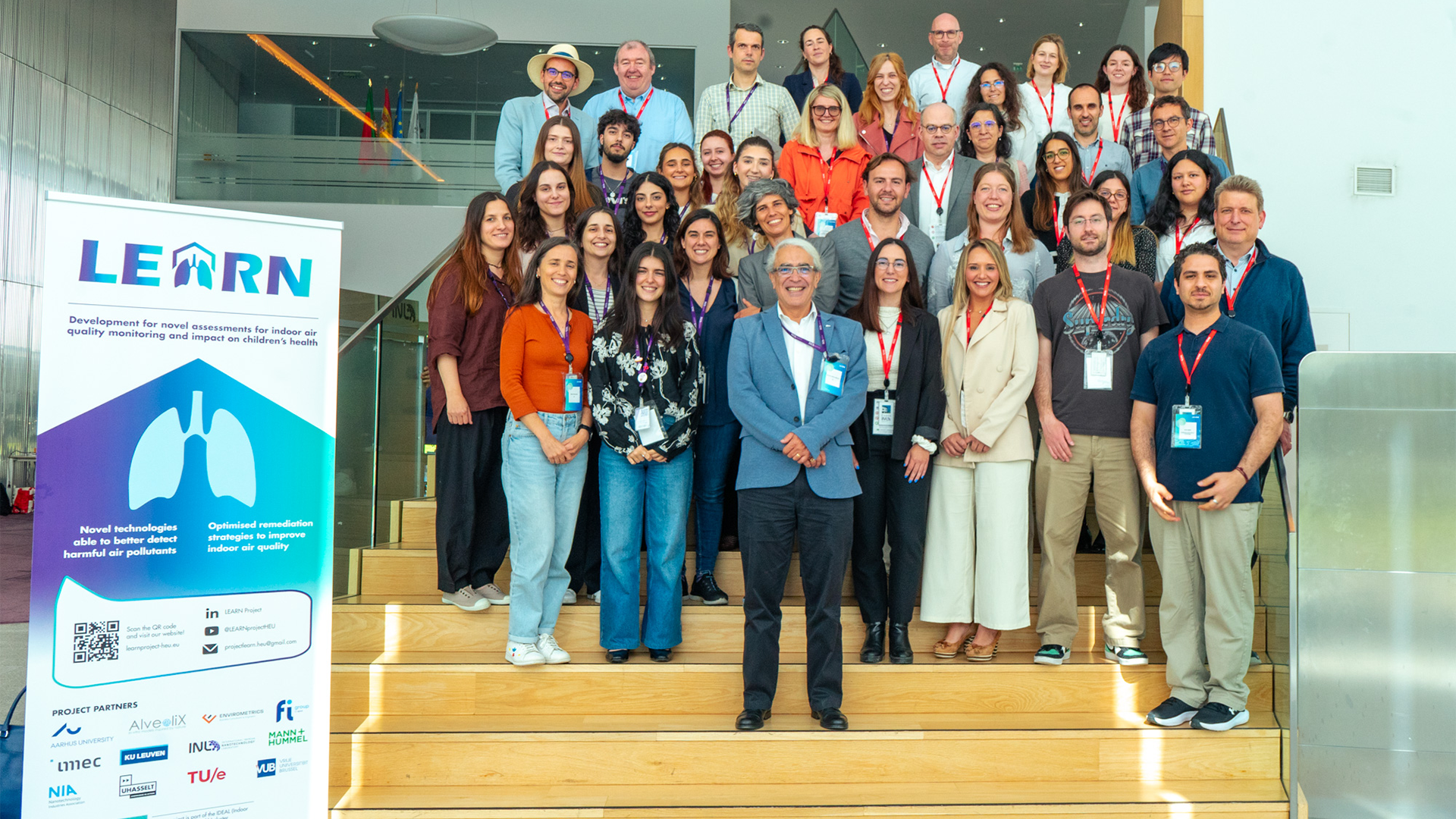
On the 19th and 20th of November 2024, the LEARN project coordinator International Iberian Nanotechnology Laboratory (INL) hosted its inaugural ESRA Symposium to connect and showcase the work of its early-stage researchers across various fields.
The symposium, organised by INL’s Early-Stage Researchers Association (ESRA), welcomed over 160 participants, including master’s students, PhD candidates, junior researchers, and early-career scientists, offering a vibrant platform to connect, share, and celebrate their innovative research.
During the event, two posters were presented by the INL team working on the LEARN project’s Work Package 4, which is devoted to developing novel sensors to detect Ultrafine Particles (UFPs) and Volatile Organic Compounds (VOCs) in the air.
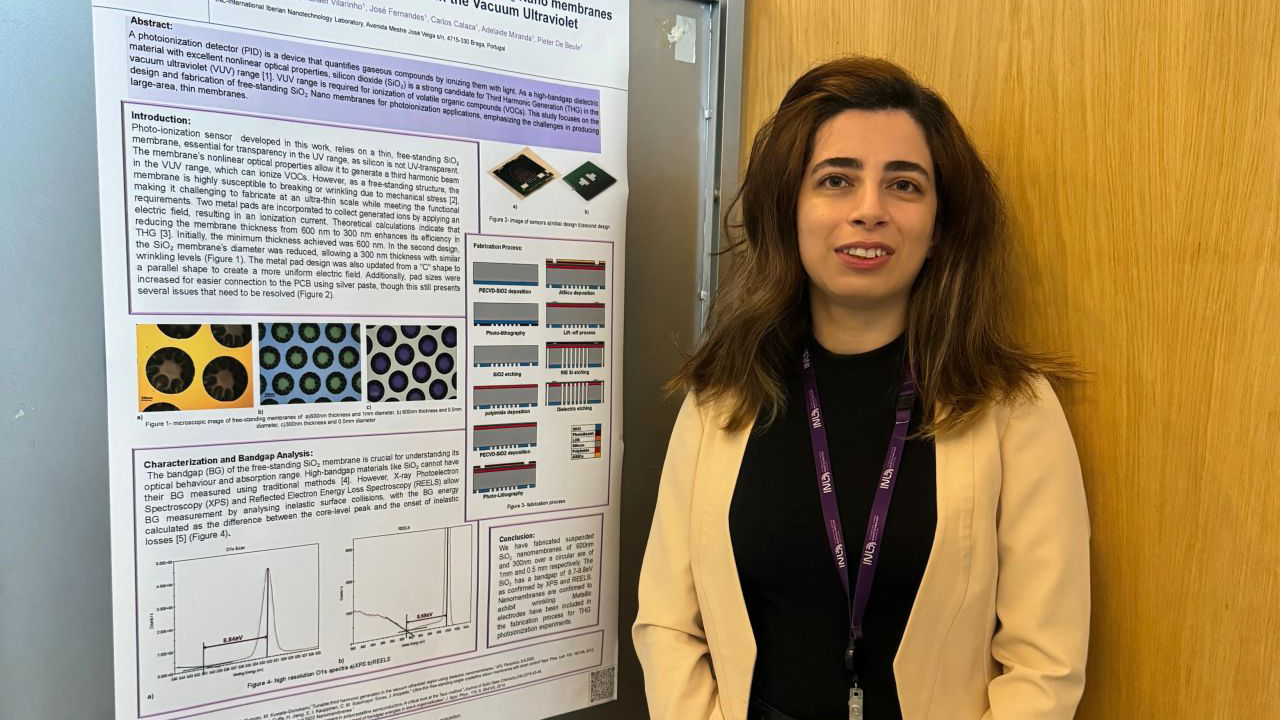
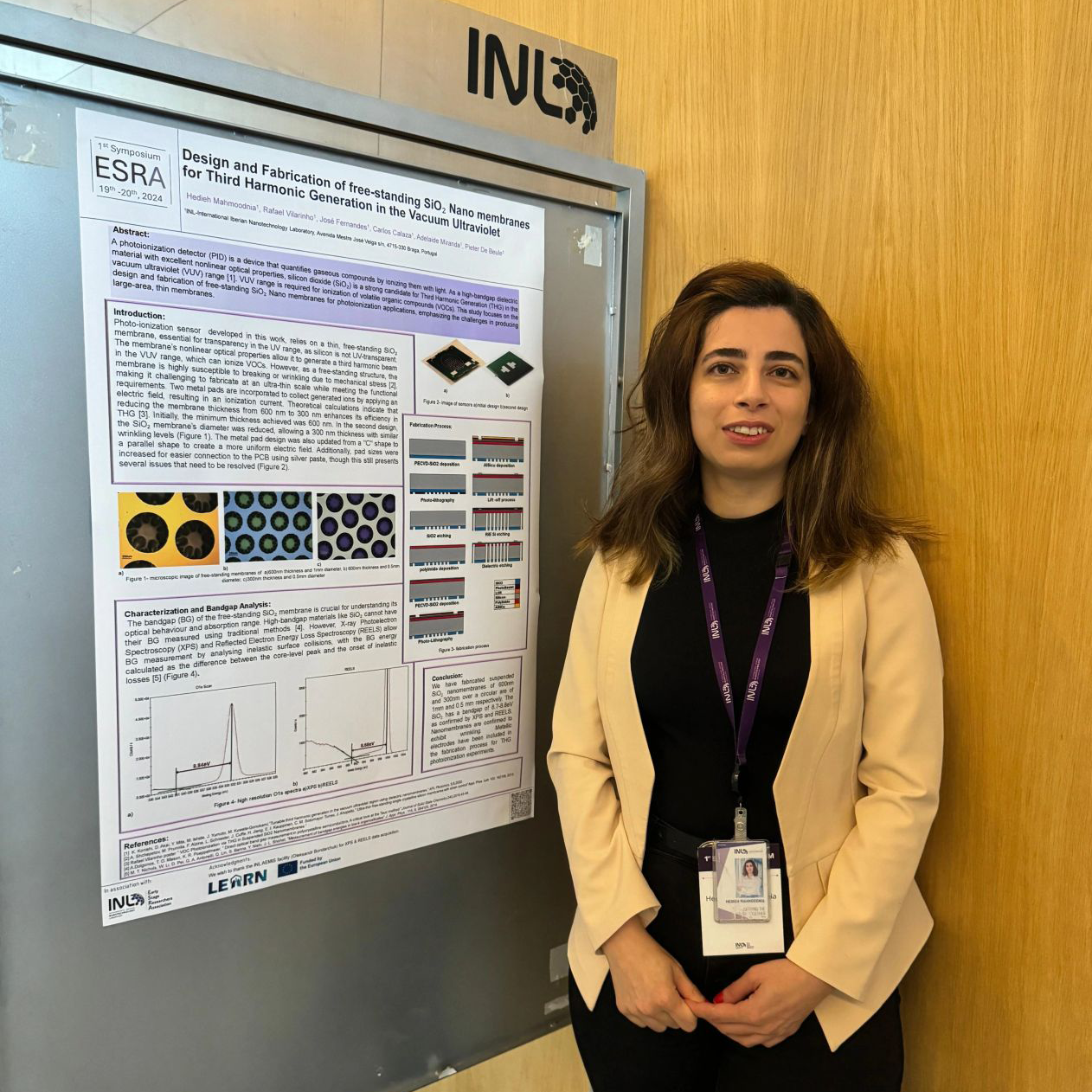
Design and fabrication of free-standing SiO₂ nanomembranes
Hedieh Mahmoodnia, research engineer at INL, exhibited the progress of her research on the fabrication of free-standing SiO₂ nanomembranes for third harmonic generation (THG) in the vacuum ultraviolet (VUV).
In the context of the LEARN project, this first test for THG using single wavelength designs allows determining and optimising the VUV source’s main parameters: damage threshold, total VUV power generated and nanopatterned area needed.
Optical anapoles excited by UV-A illumination
Diogo Poeta, research assistant at INL, presented this research developed by the Diéguez group at INL, reporting, for the first time, that the excitation of optical anapoles states can be achieved at the UV-A wavelength range.
Within the LEARN project, INL is investigating the possible designs for a multiwavelength THG with a single nanostructure, to be integrated into the prototype and validated experimentally for increased photoionisation generation from VOCs.
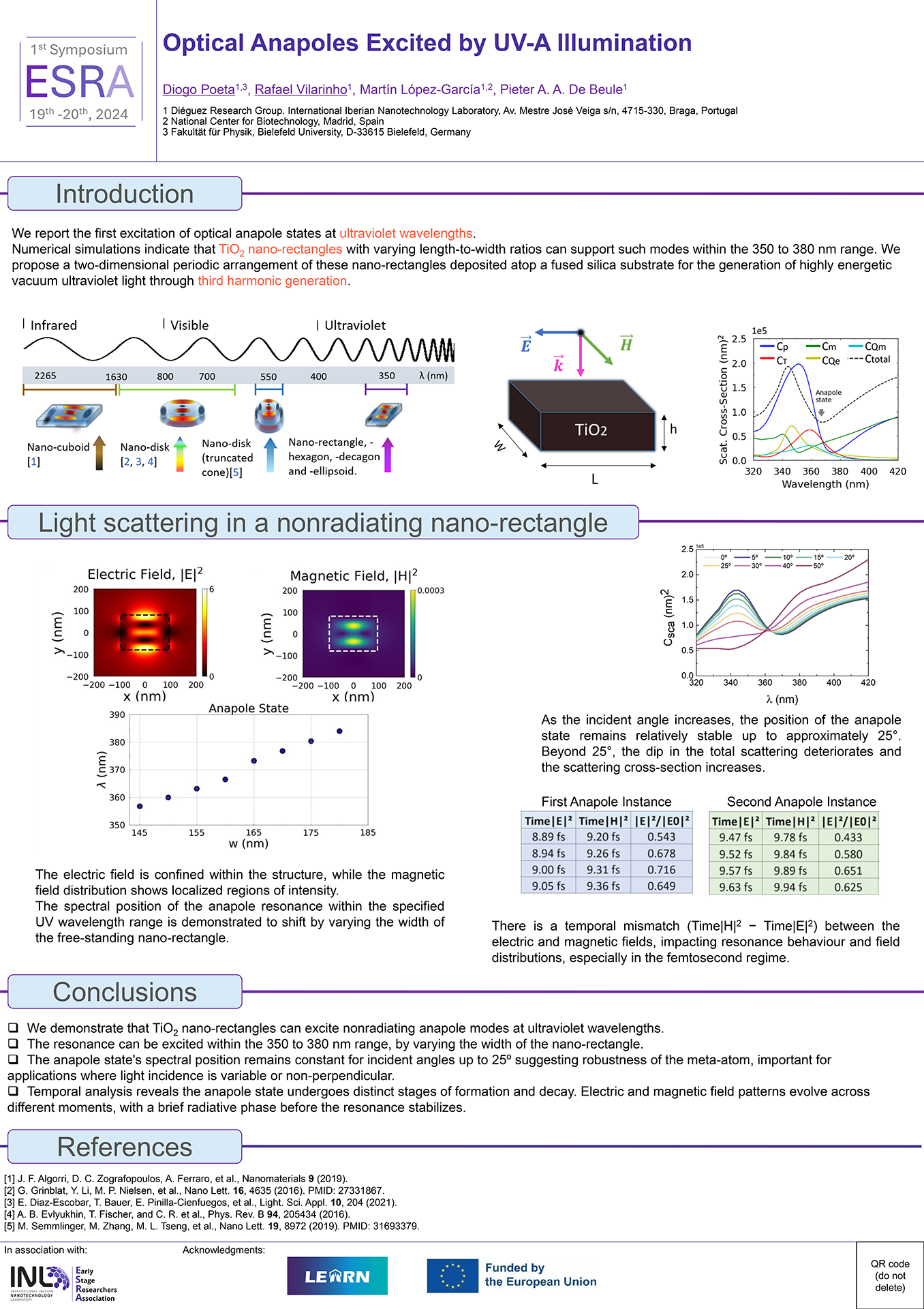
Source: Diogo Poeta, Rafael Vilarinho, Martín López-García, and Pieter A. A. De Beule, “Optical anapoles excited by UV-A illumination,” Opt. Lett. 49, 7198-7201 (2024). https://doi.org/10.1364/OL.536925
The LEARN project is a Horizon Europe project meant to monitor and evaluate indoor air quality at schools around Europe and its impact on children’s health. Our main goal is to develop and deploy novel sensors that can detect possibly harmful air pollutants, as well as advanced biosensors and optimised air remediation strategies. Find out more about our EU-funded project!