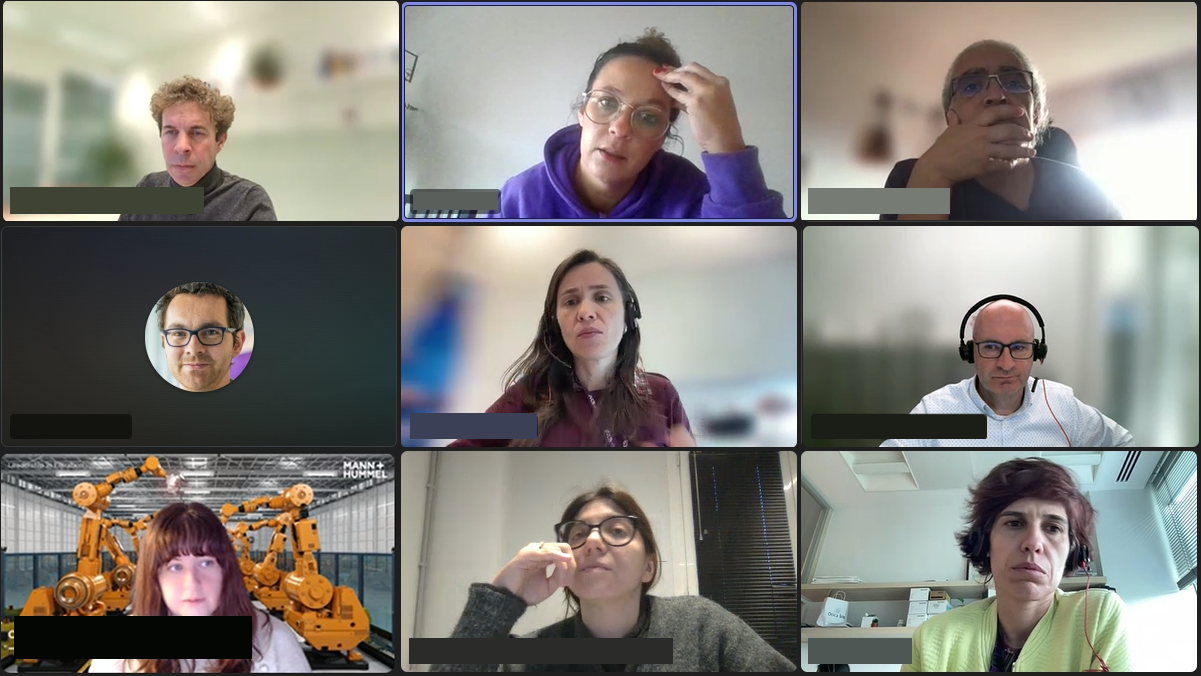
The LEARN project consortium gathered this afternoon to celebrate its 5th General Assembly, held online this time, two years and a half after its kick-off.
The different work packages presented their progress and planned actions for the next six months regarding cohorts at schools, indoor air quality monitoring, novel UFPs and VOCs sensors, advanced in vitro models and biosensors, air remediation and the LEARN data hub.
How is the LEARN project progressing?
Cohorts to assess indoor air quality in European schools are progressing well. In Belgium, 6 schools have participated so far, with more than 170 children in the cohorts. In Denmark, the cohorts started at the end of November; 20 children have participated in the first school and the second is ongoing.
Ever since the first cohort started in November 2023, some optimisations have been made to the procedures, such as monitoring CO2 levels or separating children with dividers during the cognitive tests, among others. Preliminary results seem to indicate that air purifiers (as an intervention) can reduce particle levels in classrooms, although deeper study of data from more schools will be needed to make more conclusive comments.
Meanwhile, progress is being made in the development of novel sensors to better detect ultrafine particles (UFPs) and volatile organic compounds (VOCs) in the air. Experimental setups for the UFP sensors development are ongoing at the moment, while VOC sensors are also being tested and validated.
Some progress has also been made regarding in vitro models and biosensors. As for air purifiers, they are being tested in the schools and optimised to maximise their performance in that environment. Moreover, the preliminary architecture, functional and technical design of the LEARN data hub are ready.
What’s next in the LEARN project?
The cohorts are expected to involve 2 more schools in Belgium and 2 more in Denmark by the current school year, while Greece will kick off its cohorts next September. Once the cohorts are over, the results will be analysed in terms of sampling strategy, exposure profile, health, and cognitive function, among other parameters, and they will be compared among the different environments and countries. Moreover, school stakeholders will be involved in some participatory policy-making activities.
Soon, an Ethics Advisory Board will be set up, the project’s ethical strategy will be communicated online, and the plans for the exploitation and IP protection of the results will be advanced. Some project publications are also expected to go out in the coming months, such as the 4th newsletter, the 2nd video, the 2nd press release, and papers in different scientific journals.
The LEARN project consortium will meet again in person in a few months on the occasion of the third anniversary of the project. In addition, some of the partners will attend the annual meeting of the IDEAL cluster, organised by INL at its headquarters in Braga (Portugal) at the end of March. Stay tuned for updates!
The LEARN project is a Horizon Europe project meant to monitor and evaluate indoor air quality at schools around Europe and its impact on children’s health. Our main goal is to develop and deploy novel sensors that can detect possibly harmful air pollutants, as well as advanced biosensors and optimised air remediation strategies. Find out more about our EU-funded project!